
L-Theanine for Brain Health: Why Matcha Feels Different Than Coffee
If you’ve ever noticed that matcha feels calmer, smoother, or more focused than coffee — you’re not imagining it.
One of the key reasons is L-theanine, a naturally occurring amino acid found almost exclusively in green tea, especially matcha. L-theanine plays a unique role in how the brain responds to caffeine, stress, and mental workload.
As a holistic nutritionist, I often see people who feel wired but tired, anxious, or mentally overstimulated — and for many, understanding L-theanine is a game-changer.
What Is L-Theanine?
L-theanine is an amino acid found naturally in green tea leaves. It’s especially concentrated in matcha, because matcha uses the whole tea leaf rather than just an infusion.
Unlike stimulants, L-theanine doesn’t “push” the brain into alertness. Instead, it helps create a state of calm focus — alert but not jittery, awake but not anxious.
How L-Theanine Supports Brain Health
L-theanine supports brain health in several key ways:
1. Promotes Calm Focus (Without Sedation)
L-theanine increases alpha brain wave activity, which is associated with a relaxed yet alert mental state. This is the same brain state often seen during meditation or deep concentration.
This is why many people describe matcha as:
focused, not frantic
calm, not sleepy
energized, not overstimulated
2. Helps Balance the Effects of Caffeine
Coffee delivers caffeine quickly — often too quickly for sensitive nervous systems.
Matcha, on the other hand, naturally combines:
caffeine (for alertness)
L-theanine (for calm regulation)
This pairing slows the perceived intensity of caffeine, reducing:
jitters
racing thoughts
energy crashes
For people who struggle with anxiety, ADHD, or nervous system sensitivity, this balance matters.
3. Supports Stress and Anxiety Regulation
L-theanine has been shown to influence neurotransmitters involved in stress response, including GABA, dopamine, and serotonin.
While it’s not a replacement for therapy or medication, many people notice:
less edge or irritability
improved emotional regulation
easier transitions between tasks
This can be especially helpful during mentally demanding days.
4. May Support ADHD Brains (Indirectly)
L-theanine doesn’t “treat” ADHD — but it can support the environment your brain functions in.
For ADHD brains that already burn through mental energy quickly, L-theanine may help by:
reducing overstimulation
smoothing focus when paired with caffeine
supporting calmer attention
This is one reason matcha is often better tolerated than coffee for people with ADHD.
Matcha vs Coffee: Why They Feel So Different
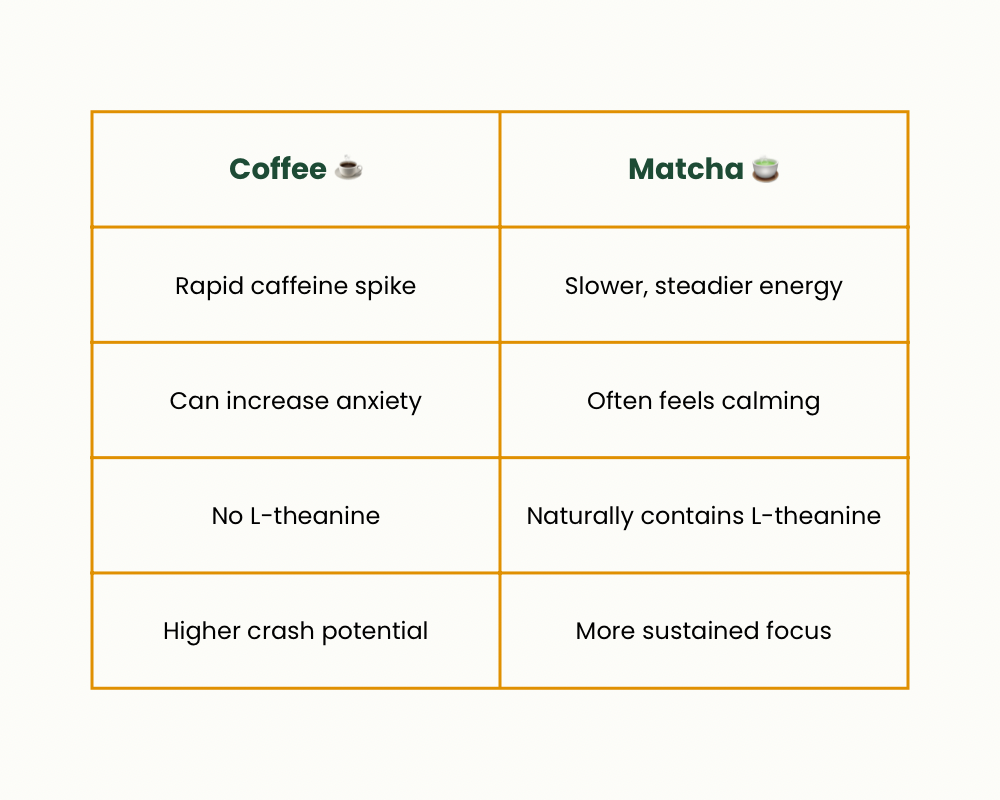
This doesn’t mean coffee is “bad.” It just means different brains respond differently.
Why I Pair Matcha With Food (or Protein)
Caffeine on an empty stomach — even from matcha — can still increase stress hormones.
That’s why I recommend pairing matcha with:
protein
healthy fats
carbohydrates
This helps:
stabilize blood sugar
prevent crashes
support sustained focus
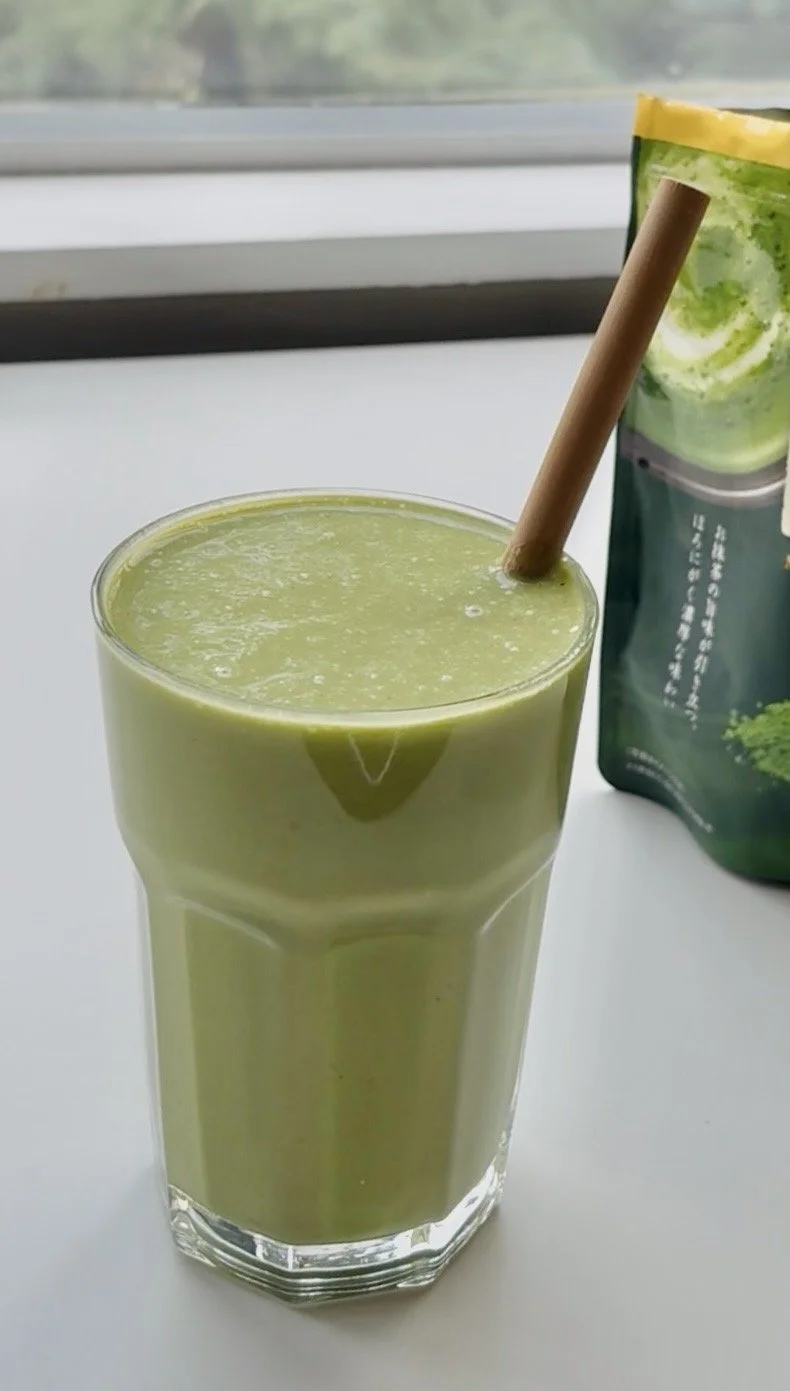
If you want an easy way to try this in real life, my matcha protein smoothie recipe pairs L-theanine with protein and healthy fats for steadier energy.
Food Sources of L-Theanine
L-theanine is found almost exclusively in:
green tea
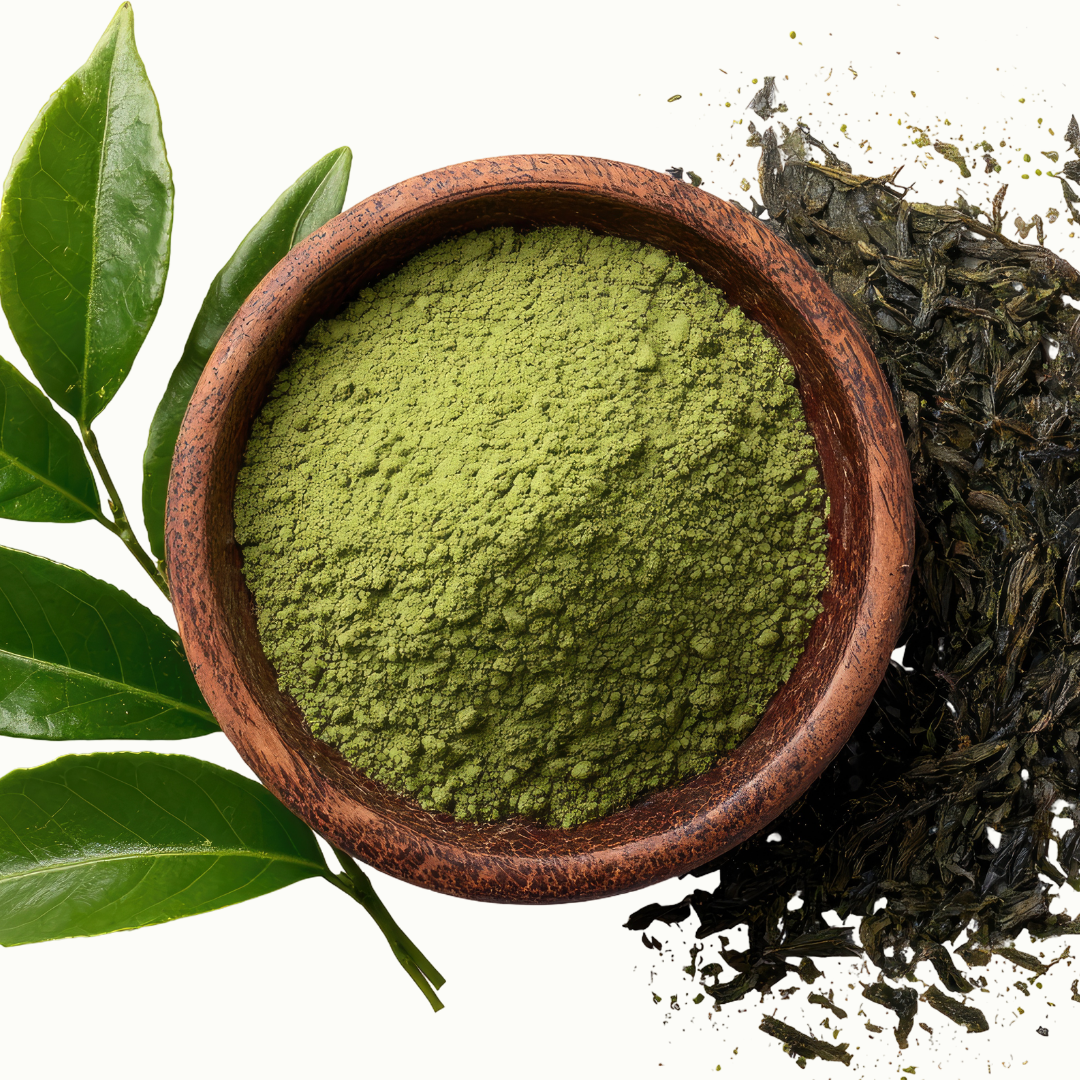
matcha (highest source)
Unlike many nutrients, it’s difficult to get meaningful amounts from other foods — which is why matcha stands out as a functional option.
Should You Supplement L-Theanine?
Some people choose L-theanine supplements, but food sources are often a gentler place to start.
If you’re considering supplements:
talk to your healthcare provider
especially if you’re on medications for anxiety or ADHD
Food-first approaches tend to be more sustainable and better tolerated.
Who May Benefit Most From L-Theanine?
You may notice benefits if you:
feel anxious or jittery with coffee
struggle with overstimulation
experience brain fog with caffeine
want calmer, steadier energy
have ADHD or a sensitive nervous system
Final Thoughts
L-theanine helps explain why matcha feels different — and why it can be such a supportive option for brain health.
It’s not about chasing productivity or forcing focus.
It’s about supporting your nervous system so focus can happen naturally.
If you’re curious to try it, pairing matcha with food (like a balanced smoothie) is one of the easiest ways to start.
